
North-East Tourism
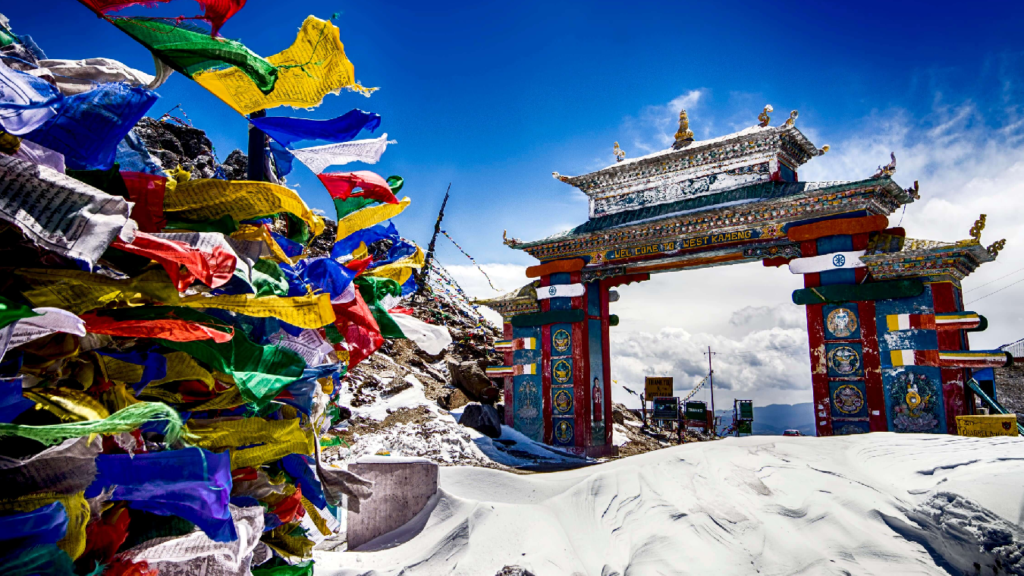
North East India tourism offers diverse experiences, from Assam’s rhinos and Meghalaya’s living root bridges to Sikkim’s monasteries and Arunachal’s tribal cultures, across its eight states (Arunachal, Assam, Manipur, Meghalaya, Mizoram, Nagaland, Sikkim, Tripura). Key attractions include Kaziranga National Park, Tawang Monastery, Shillong’s lakes, Cherrapunji’s waterfalls, Loktak Lake, and vibrant festivals like Nagaland’s Hornbill Festival, with activities ranging from trekking and rafting to wildlife safaris and cultural immersion. Top Destinations by State Popular Activities & Experiences Getting Around & Planning
Bhutan
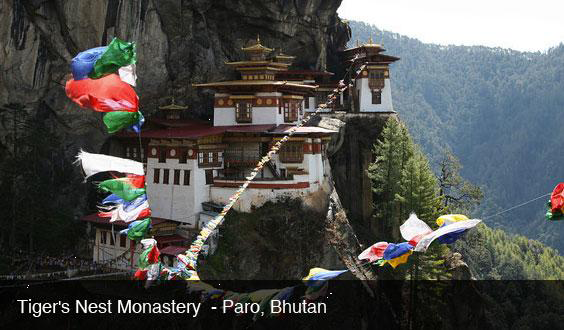
BHUTAN: – A country resting peacefully in the lap of eastern Himalayas is one of those very few places that can probably take you back in time. The unadulterated nature, around 73% of the land drenched in wild greenery, the flag with dragon engraved on it, the rice that is born red, the place which is believed to be haunted by multiple demons and protected by multiple gods, the innocence of the locals that still believe that snowman exists and dragons spit fire, the land that has preserved the rarest of the nomadic tribes and fauna on the list of ‘red-alert’ is what Bhutan is made up of. Not very well known amongst the tourist crowd, Bhutan indeed offers some mystical, magical places to visit for the intrepid traveller. HOW TO REACH BHUTAN: BY AIR Paro is the only international operational airport in Bhutan and it is connected by: THROUGH INDIA BY AIR, RAIL & SURFACE Phuentsholing- Bhutan / Jaigoan, West Bengal, (The Indian side city of the border) is conveniently connected by surface and presently the only overland border entries open to Indian & International Tourists. The town of Phuentsholing is located approximately SIGHTSEEING PLACES IN BHUTAN: THIMPHU: – Thimphu is the capital of Bhutan and the largest town in Bhutan. It lies at an altitude of 2400 metres . All Government headquarters and centre for trade are located here. The following are the places of tourist attraction in Thimphu: 1. Trashichho Dzong: Meaning “fortress of the glorious religion” was initially erected in 1641 and rebuilt by King Jigme Dorji Wangchuck in the 1960s. It is one of the largest dzongs in Bhutan. The Dzong houses the throne room and office of His Majesty and is the seat of government and religious affairs in the kingdom. The northern portion of the dzong has the summer residence of the central monastic body and His Holiness the Je Khenpo (chief abot). It is open to visitors only during the Thimphu Tsechu (held in autumn) and during winter when the monk body moves to Punakha. 2. National Memorial Chorten: This monument was built in 1974 in the memory of the late King Jigme Dorji Wangchuck. It was originally the idea of Bhutan’s third king, H.M. Jigme Dorji Wangchuck to erect a monument for world peace and prosperity but could not be done due to his untimely death. So after his death, it was built to in his memory and to serve as a monument for world peace. 3. Simtokha Dzong: Built in 1627, it is the oldest Dzong in the country. The most noteworthy artistic feature of this dzong is the series of over 300 finely worked slate carvings behind the prayer wheels in the courtyard which are centuries old. The paintings inside this dzong are believed to be some of the oldest and the most beautiful in the country. 4. National Library: The National Library was established in the late 1960s and it houses an extensive collection of Buddhist literature mostly in block-printed format and some works are several hundred years old. There is also a small collection of books in English on the ground floor mainly on Buddhism, Bhutan, the Himalayan region and neighboring countries. 5. Institute for Zorig Chusum: Commonly known as the Painting School is an institute established primarily to preserve and promote Bhutan’s unique artistic tradition which played a vital role in moulding its distinct heritage. The Institute offers a six-year course on the 13 traditional arts and crafts of Bhutan and on a visit one can see students learning the various skills taught at the school. 6. National Institute of Traditional Medicine: The Institute was established in 1967 as a center for indigenous medicines and practice. In olden times, people primarily relied on the indigenous medicines to cure their illness. The Institute also serves as a training school for traditional medicine practitioners. The complex is closed to visitors due to considerations of hygiene, but one can still walk around and view it from the outside. 7. Changangkha Lhakhang: This temple is one of the oldest in the Thimphu and was built in the 12th century by Nyima the son of Phajo Drugom, the founder of Drukpa school of Buddhism in Bhutan. The temple is highly revered by the Bhutanese especially because new born babies are normally brought here to seek blessings from the deity. 8. Dechen-phodrang : This is the site of Thimphu’s original Tashicho Dzong until 1772 and was named “Do Ngon Dzong” meaning the fortress of the Blue Stone. Today, it houses the monastic school where novices are taught before they go for higher Buddhist studies. The monastery contains paintings of the 12th century which are being restored for preservation. 9. Wangdi-tse Monastery: This monastery is located further uphill towards the west of Dechenphodrang. It was founded in 1750 by 8th Desi Tenzin Rabgye and houses some ancient stupas made of sandal wood. One can take the natural trail walk from the BBS tower at the hill overlooking Thimphu valley to this monastery. 10. Folk Heritage Museum & the Textile Museum: These museums, both of which opened in 2001, provide fascinating insights into Bhutanese material culture and way of life and is a ‘must see’ when in Thimphu. 11. Buddha Dordenma: The quaint town of Thimphu is home to a 51 metres tall gold-plated statue of Buddha Dordenma, which is entirely made up of steel. The night sees this statue beautifully illuminated and makes it even better sight to behold. The statue houses around 125,000 spectacular smaller Buddha statues made of bronze and plated in gold, each of which looks like the Dordenma itself.Built amidst the ruins of Kuensel Phodrang , it marks your entry in Thimphu. The golden gilded statue is a marvel to behold, especially at nights, when it shines against the dark sky. The base of the statue, which is 3 storeys tall, is a meditation hall. It is one of the largest Buddha Stupas in the world. 12. Simply Bhutan
Leh-Ladakh – Moonland
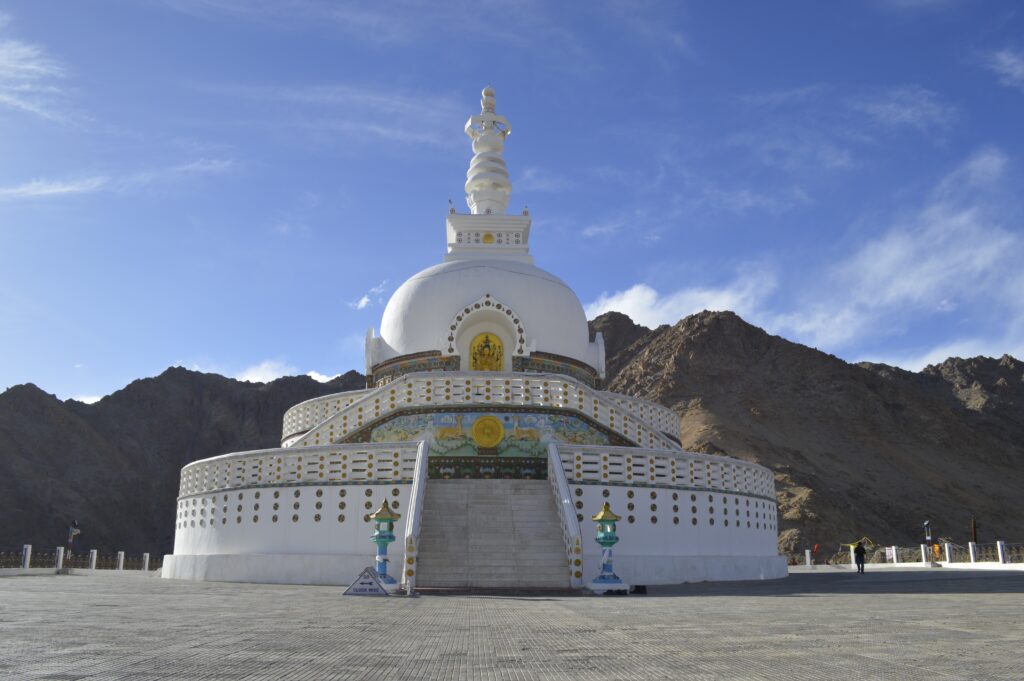
Leh-Ladakh is a stunning high-altitude cold desert region in North India, known for its dramatic landscapes, Buddhist monasteries, high mountain passes (like Khardung La), and unique Tibetan-influenced culture; Leh serves as the capital and main town, offering access to attractions like Pangong Lake, Nubra Valley, and ancient monasteries such as Thiksey, with travel typically involving acclimatization due to the extreme altitude. Key Aspects: Geography: A vast, mountainous terrain with barren beauty, high-altitude lakes (Pangong Tso), and valleys like Nubra. Capital: Leh is the largest city and joint capital, serving as the hub for tourists and administration. Culture: Rich Tibetan Buddhist heritage, seen in its monasteries (Thiksey, Hemis, Shey) and vibrant local life. Altitude: Extremely high, requiring visitors to acclimatize gradually to avoid altitude sickness. Attractions: Monasteries, high passes (Khardung La), Indus-Zanskar river confluence, Shanti Stupa, Magnetic Hill. Planning a Trip: Best Time: Summer (April-July) offers pleasant temperatures (15-30°C) for travel, though it’s cold most of the year. Getting There: Fly into Leh or drive via challenging but scenic routes from Manali or Srinagar. Acclimatization: Crucial; allow a day or two in Leh upon arrival to adjust. Getting Around: Walk in Leh town, but hire taxis or join tours for sightseeing. Why Visit?It’s a destination for adventure seekers, spiritual explorers, and nature lovers, offering otherworldly landscapes, spiritual experiences, and a glimpse into a distinct mountain culture, often called “Little Tibet” or India’s “Moonland”